How Long Does It Take to Train a Service Dog? A Realistic Timeline
How Long Does It Take to Train a Service Dog? A Realistic Timeline
When people see a service dog flawlessly navigating a grocery store or alerting to a medical crisis, the first question they often ask is, "How long does service dog training take?"
The short answer: Generally, it takes 1.5 to 2 years.
The long answer is much more nuanced. Training a service dog—especially when you are an owner-handler managing a condition like POTS or recovering from multiple surgeries—is not a linear process. It is a journey influenced by canine developmental stages, handler health, and the complexity of the tasks required. At A Canine Experience, we’ve seen that the best partnerships are built on a foundation of patience and professional expertise.
The Standard Industry Benchmark
According to industry standards and organizations like Assistance Dogs International (ADI), most professional programs take about two years to fully train a dog. When you are owner-training, this timeline rarely gets shorter. In fact, it may take slightly longer because you are balancing the training with your own medical needs, doctor appointments, and life responsibilities.
The Phase-by-Phase Breakdown
At A Canine Experience, we believe that specialized work shouldn't wait until the end. We begin the process of identifying chemical or physiological changes in the body as early as possible.
Phase 1: Foundation & Early Scent Imprinting (0–6 Months)
This is the "Puppyhood" phase. While the goal is building a neutral, confident dog, we also start the medical foundation.
Focus: Potty training, basic manners, and exposure to different environments.
Scent Work: We start as soon as possible with imprinting the odor. This is where the dog learns to recognize the specific chemical or physiological markers associated with a medical event.
The Goal: A dog that is observant, neutral to its environment, and focused on its "target" scent. This can look like training in busy distracting environments like restaurant patios, busy parking lots or busy parks with a lot of distractions.
Phase 2: Public Access & Shaping the Alert (6–12 Months)
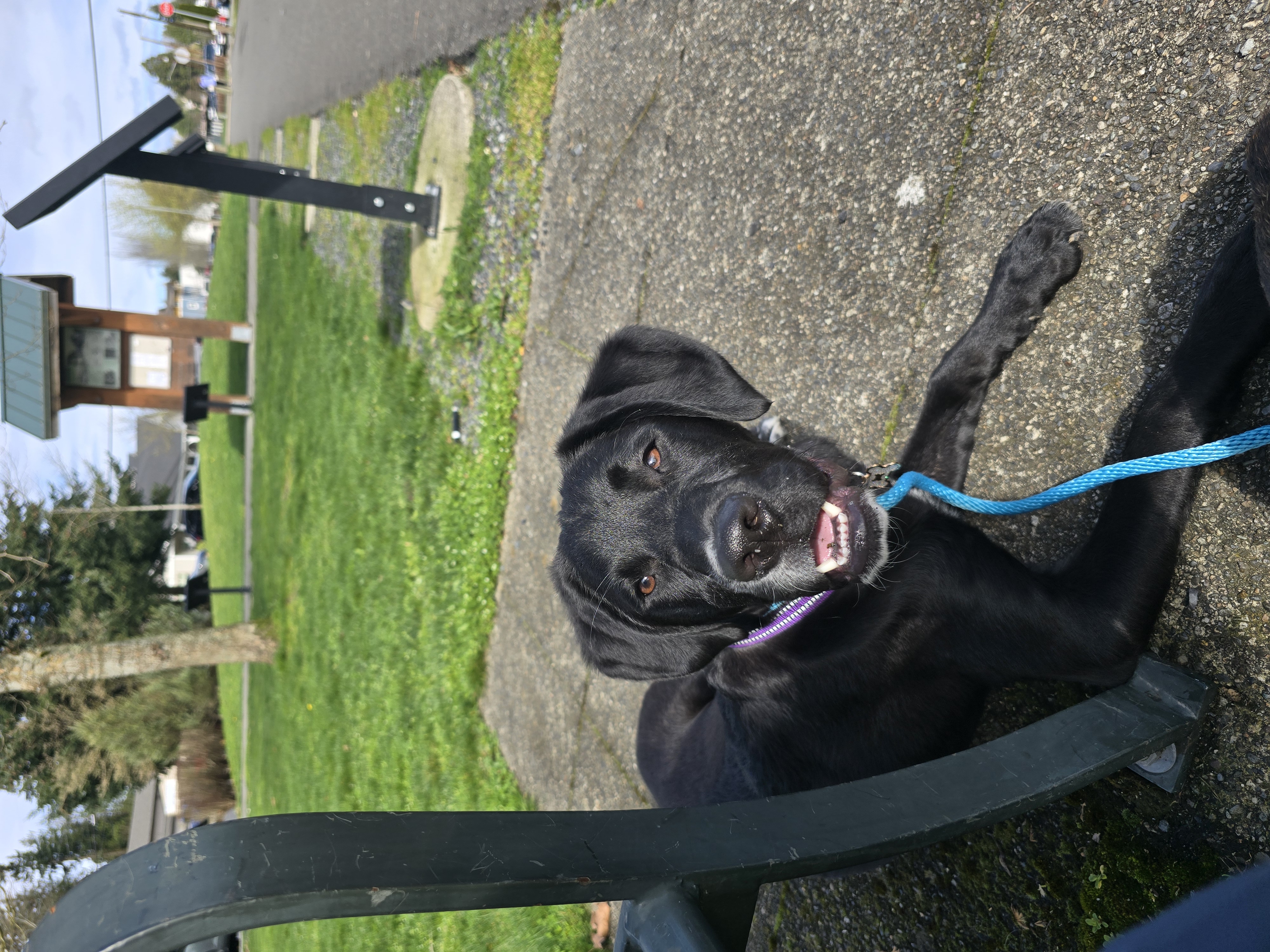
This is often where Mowgli is now—the "Teenage" phase. As a Labrador/Aussie mix born in late 2024, he is hitting the stage where hormones and high energy can make consistency a challenge.
Focus: Perfecting "heel," "stay," and "settle" in increasingly distracting public environments.
Scent Work: We move into shaping the alert. This involves teaching the dog a specific physical behavior—like a nudge, a paw, or a stare—to perform the moment they detect a change.
The Reality: Support from professionals like Trina R. Eddy is crucial here to navigate teenage regressions.
Phase 3: Discrimination & Specialized Tasks (12–18 Months)
Once the foundation is rock-solid and the alert is shaped, we move into more complex cognitive work.
Scent Work: This is the discrimination stage. The dog learns to ignore "normal" smells and only alert to the specific physiological changes that indicate a crisis. Mowgli is currently at the beginning of this stage.
Task Work: This phase includes Deep Pressure Therapy (DPT), item retrieval, or finding help. Whether the dog is alerting to blood sugar drops in Diabetes, neurological shifts in Epilepsy, or heart rate spikes in POTS, this is where the reliability is built.
Phase 4: Proofing & Graduation (18–24 Months)
The final stage is about absolute consistency.
Scent Work: This is the proofing stage. Can the dog alert to a physiological change in a crowded airport? Can they maintain a "tuck" under a table for two hours during a doctor’s appointment?
The Goal: Total reliability across all environments.
Factors That Can Change Your Timeline
1. The "Teenage" Phase Rescue dogs or high-drive breeds often hit a "rebellious" stage around 8–14 months. It doesn’t mean your dog isn't service dog material; it just means they need a "training refresh."
2. Handler Health & Surgeries One of the biggest variables in how long service dog training takes is the handler's ability to be consistent. If you are dealing with medical flares or recovering from surgeries—as I have been over the last eight weeks—the timeline may stretch. Admitting that you need to pause or hand the leash to the professional team at A Canine Experience during recovery is an act of advocacy for your future.
3. Variety of Medical Conditions Every condition has its own nuances. Alerting to the chemical changes of Type 1 Diabetes might require different proofing than responding to the physiological signs of PTSD or Cardiac issues. Each path is unique.
Why You Can’t Rush Greatness
Attempting to force a dog into full service work before they are developmentally ready (usually before age two) can lead to burnout. We are training for a 10-year career, not a 10-week trick.
Ready to start your own journey? Don't try to navigate the complex world of service dog training without a map. Coming this June, we are launching an exclusive hybrid service dog course! By joining the waitlist now, you’ll secure early access and special bonuses, including our Puppy Pathways™ mini-course, designed specifically to help you start your journey by choosing the right dog from the very beginning. You won't want to miss out!
Join our International Service Dog Hybrid Course Interest Waitlist here to lock in your early access bonuses and take the first step toward training the partner you deserve.
